A
delightful musical interpretation of the beloved Lewis Carroll poem,
this piece is easy to put together and is an excellent choice for a
choir's first experience with part-singing. The catchy melody
transitions to a round in two or three parts, giving you practical
options for your beginning choirs.
Full
of stylistic variety and tonal color, this piece includes a positive
message about how imagination and forward thinking sets us free to
accomplish great things. I'm riding the tail of a comet, floating
through new galaxies. If you're looking for me, you'll find me taking my
place among the stars.
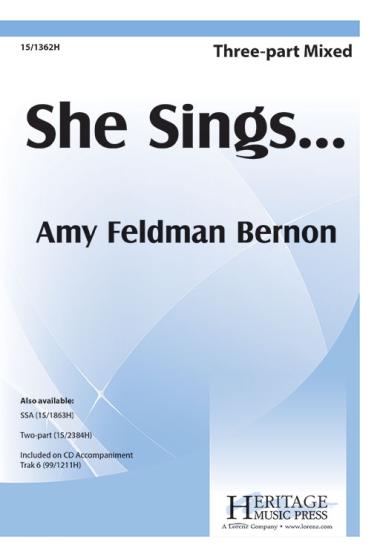
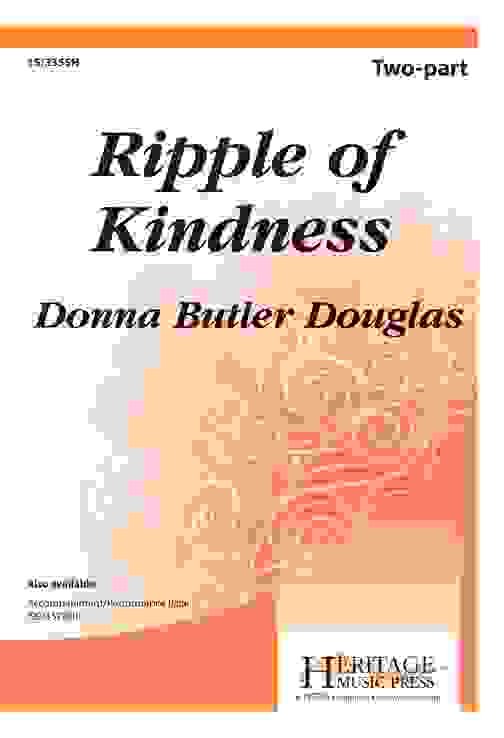
Artful
tonal shifts with a splendid modulation grace this effective piece for
young voices that features a meaningful text reflecting on how we all
play a part in spreading joy and goodwill as we each make a difference
in building a better world.
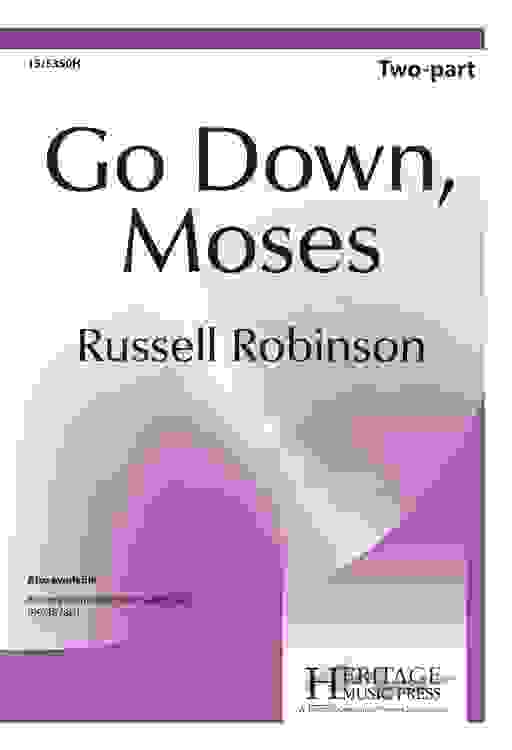
Elegantly
set to bring out the best in young voices, this cool jazz, laid-back
treatment of a favorite spiritual is loads of fun to sing! The repeated
sections aid in quick learning and make for a great piece for any
program.
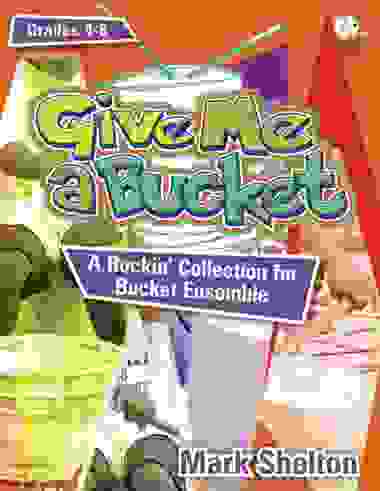
In this video, Mark Shelton plays an excerpt of "Strange Asparagus" from his popular collection, Give Me a Bucket. Enjoy!
Grades 4–8 • Music education meets the vibrant energy of street
musicians in this accessible collection for bucket ensemble. Mark
Shelton brings you a dozen arrangements utilizing buckets, pails, and
drumsticks. In addition to guiding you through the process of setting up
your bucket ensemble, this collection includes teaching and performance
tips, some simple choreography, and performance tracks.
Mark Shelton has presented hundreds of arts-in-education
performances as a percussion soloist and as leader of the world music ensemble,
Tin Roof Tango. From the early days of his career as Visiting Artist at Coastal
Carolina Community College to his current work as a soloist, clinician,
sideman, and entrepreneur, Mark has created programs, products, and educational
services for a variety of ages. The author of Give Me a Groove from Heritage Music Press, Mark has also published
articles in Percussive Notes, Activate!, Dulcimer Players News, and Worship
Musician.
by Mark Jauss, Advertising Associate and Choral Director
Last month, I put together a blog post that highlighted secondary selections that would bring the festival experience to your high school choral classroom. This post is a follow-up to that post and includes selections for middle school choirs. All of the pieces below have been performed in a variety of festival settings and will recreate this transformative experience in your middle school choral classroom. Enjoy!
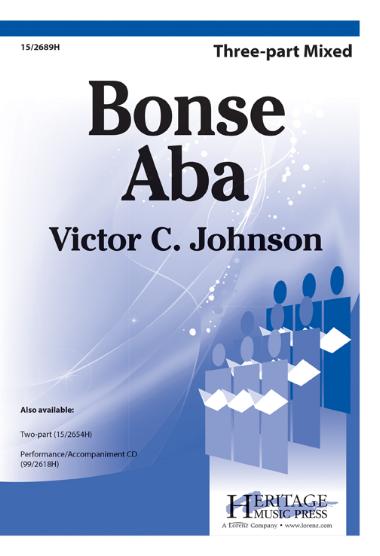
Sizzling
with celebratory energy, this African folk song loosely translates:
"Those that sing have the right to be called the children of God." Hand
drum, djembe, and shaker add authentic flavor and opportunities for
improvisation, and the vocal parts are repetitive and easy to learn.
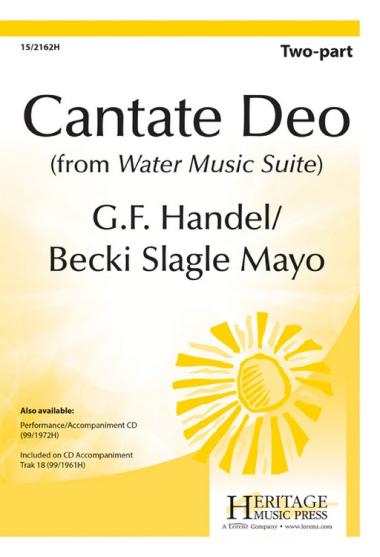
Becki Slagle Mayo creatively adapts the Hornpipe movement from Handel's Water Music Suite
for voices. Complete with original text, contrapuntal texture, and
imitative vocal lines, this festive choral gem is sure to make an
impact.
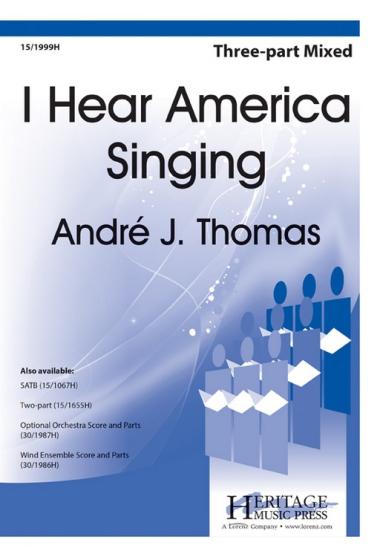
This
stunning selection is the perfect attention-grabber for the beginning
or conclusion of a concert. Quoting the traditional spiritual Walk Together, Children, André Thomas creates an energetic and rhythmic experience that will make choirs of all shapes and sizes feel successful.
The
haunting yet whimsical quality of this piece is truly refreshing.
Centered around a child who loves to sing during the day and at night
"cries for those who have never loved and for those who never sing,"
this endearing selection will stir the emotions of the audience.
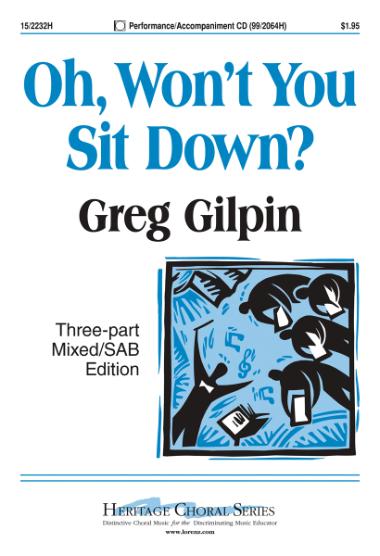
Greg
Gilpin works his magic with this absolutely infectious arrangement!
Through the use of rounds, vocal ostinatos and dynamic contrasts, all
will be instantly engaged in this energetic and fun-filled work.
Here is a performance by the 2008 GMEA All State Middle School Mixed Choir...
____________________________________________
Mark is
a graduate of Wright State University in Dayton, OH, having received a
bachelor’s degree in music education and a master’s degree in choral
conducting.
Before
coming to Lorenz, Mark was the director of choirs at
both Howard W. Blake High School for the Performing Arts in Tampa, FL, and
Monroe Jr./Sr. High School in Monroe, OH.
Mark is also currently the director of the KCC Concert Choir, an advanced
treble choir within the Kettering Children’s Choir organization. The group has
toured extensively, and recently sang in the National Cathedral in Washington,
D.C. and with the South Cape Children’s Choir and various performing ensembles
on a tour throughout South Africa. In the Spring of 2015, Mark also had the
privilege of preparing the choir for performances
of the Britten War Requiem under the baton of Keith Lockhart, conductor of the
Boston Pops. In addition, Mark
has been the music director at his church since the age of 18, and regularly
travels throughout the country giving workshops on conducting and worship leading.
Mark is the blessed
husband of Jennifer and proud father of Michael and Ellie.
So many times I tell my choirs to “begin with the end in mind,” as I
learned from Steven Covey. When discussing a performance, I will
sometimes ask, “What do you want the audience to say when you finish?”
or “What do you want the audience to feel during your performance?” When
it comes to singing in a competition, this line of thinking goes a bit
farther.
Let’s take for example when my choirs perform at Ohio Music Education
Association Large Group Contest each spring. OMEA ratings are:
-I: Superior
-II: Excellent
-III: Good
-IV: Fair
-V: Poor
We discuss what we need to do in order to prove beyond the shadow of a
doubt that we deserve a Superior rating. Until recently, I told the
students to tell the judges (with their singing) to put down a “I.”
Then something changed. I judged an ICCA Quarterfinal (International
Championship of Collegiate Acappella). As I judged, I was constantly
thinking, constantly writing, constantly thinking of what number to
circle in each category. How I wished for a group who sang so well I
could just listen. Not write. Not circle. Just listen and enjoy.
I realized that I had never fully articulated to my choirs what was
in my heart for so long. Since we are in ramp-up for OMEA contest now, I
asked my top choir, “What do you want the judges to put down?” I heard a
chorus of “I!” and “Superior!” and even some “zero!” (being above a I).
Then I said, “I want them to put down their pencils.”
A judge who is caught up in an artistic performance doesn’t want to write or score. They just want to listen. They will gladly take the opportunity to step away from the jobof judging to become a happy audience member.
If your performance can make that happen, then you’ve won – regardless
of your score. Don’t get me wrong – I’m not here to say “we’re all
winners!” I don’t think that way. I do, however, think there can be more
than one winner in music – which is what makes music different than a
basketball game. Anyone who can turn the dots on the printed page into engaging music for the audience is a winner.
When your goal is a score or a winning rank, you aren’t striving
towards artistry. If you try to get a specific number out of a judge and
fail, then you’re just a failure. If your goal is to create art and you make it,
there’s no score or ranking that can invalidate your
performance. Creating art is the highest challenge, and if you succeed
with your singing, the scores and ranks typically take care of
themselves.
At the end of the day, music is an art form. When performed well, it
becomes nearly impossible to score. That’s why competitions are both
good and bad. They are good because they drive us to make our
performances strong enough to become true art, and thus a subjective
matter that lives outside of scoring. What a paradox! Yes, there
will still be scoring in contests, and there will be ratings awarded.
There might be plaques or trophies handed out. Still, the real winners
will always be those who created true art on stage and every audience
member not holding a pencil.
For more outstanding insights from Brody, be sure to visit his blog at www.brodymcdonald.com!
_____________________________________________
Brody McDonald is the director of choirs at Kettering
Fairmont High School and a faculty member of Wright State University in Dayton,
Ohio. His choirs have performed regularly at OMEA, ACDA Central Division and
ACDA National conferences. In addition, they have performed with international
artists such as Kenny Rogers, LeAnn Rimes, The Beach Boys, Kenny Loggins and
Pentatonix. His award-winning a cappella group, Eleventh Hour, is
the first high school group to be featured on NBC's The Sing-Off. They
have also been featured on ABC's Extreme Makeover Home Edition and won a gold medal in the Pop Choral
Champions Division at the World Choir Games. Eleventh Hour's studio
recordings have been included numerous times on Best of High School A
Cappella and have won CARA awards for Best High School Album and Best
High School Song.
Brody is at the forefront of the educational a cappella
movement, serving as a founder of the A
Cappella Education Association and as a nominator/judge for the Contemporary
A Cappella Recording Association (CARA). He has presented at
numerous educational conferences on pop a cappella in the classroom, and
regularly lectures on the topic for ACDA chapters throughout the Midwest. Brody
is the author of A Cappella Pop: A
Complete Guide to Contemporary A Cappella Singing and the co-owner of Camp A Cappella (www.campacappella.com),
an immersive week-long summer camp dedicated to the study of contemporary a
cappella.
Brody is
a graduate of Bowling Green State University, where he received
a bachelor's degree in music education and a master's degree in choral
conducting. He is an experienced barbershopper who sang in an international
champion college quartet, a top-20 open class quartet, and in a bronze-medal
chorus. He has been named one of Choral
Director magazine's Choral
Directors of Note.
I don't know about you, but if there's one aspect of my rehearsals that I find I need to continuously refresh, it's the warm-ups. All too easily these wonderful opportunities for teaching and growth can become monotonous and stale. Sufficient time is set aside for score study and overall rehearsal planning and preparation, of which warm-ups should be a part, but they're are all too often an after thought (after all, I've been doing this for so long that I can just "shoot from the cuff" here, right?). As choral educators, we understand that the warm-ups are a vital component of our rehearsal, but yet the forethought we give them doesn't always reflect this awareness.
When I find myself wondering why a rehearsal wasn't as effective as I would have liked, I tend to take a look at the way it started. Were the singers engaged in the warm-ups? Did they understand the connection between the warm-ups and their music? Was there a connection between the warm-ups and their music? Were they challenged by the warm-ups, or did they just "go through the motions?" Did I just go through the motions myself?
When I start asking these questions, I know that it's time to start looking around for some new warm-ups; it's time, perhaps, to hit the "refresh" button. And, while there are a few publications that I consistently refer to (The Complete Choral Warm-up Book by Russell Robinson and Jay Althouse, for instance), I often find myself looking to YouTube for inspiration. While there is often much "wading" through that needs to be done, I have stumbled across and returned to a few wonderful videos over the years when I feel the well has run dry. These videos are outline below, and I hope that you'll receive renewed inspiration from them, as I have. Enjoy!
Here is the Indianapolis Children's Choir in action. Some great takeaways here if you're looking for exercises to energize your ensemble (I'm a big fan of kinesthetic engagement)...
If you're looking for a new ear training exercise, this one is fantastic. It presents a considerable challenge, but is also very rewarding once the singers master it.
...and another ear training exercise, this time demonstrated by Voices in Harmony.
If you're looking for a few new exercises to engage the breath, check this out...
Some wonderful examples here for activities that activate the body and mind (same awesome middle school boys choir!)...
Lastly, here is a look into a high school choral rehearsal. I've used, and had success with, almost all of the exercises demonstrated in this video. Some great stuff here.
Do you have any warm-ups that you'd like to share? Any warm-ups/resources that you find yourself returning to over and over again? Would love to hear from you, if so!
__________________________________________ Mark is
a graduate of Wright State University in Dayton, OH, having received a
bachelor’s degree in music education and a master’s degree in choral
conducting.
Before
coming to Lorenz, Mark was the director of choirs at
both Howard W. Blake High School for the Performing Arts in Tampa, FL, and
Monroe Jr./Sr. High School in Monroe, OH.
Mark is also currently the director of the KCC Concert Choir, an advanced
treble choir within the Kettering Children’s Choir organization. The group has
toured extensively, and recently sang in the National Cathedral in Washington,
D.C. and with the South Cape Children’s Choir and various performing ensembles
on a tour throughout South Africa. In the Spring of 2015, Mark also had the
privilege of preparing the choir for performances
of the Britten War Requiem under the baton of Keith Lockhart, conductor of the
Boston Pops. In addition, Mark
has been the music director at his church since the age of 18, and regularly
travels throughout the country giving workshops on conducting and worship leading.
Mark is the blessed
husband of Jennifer and proud father of Michael and Ellie.

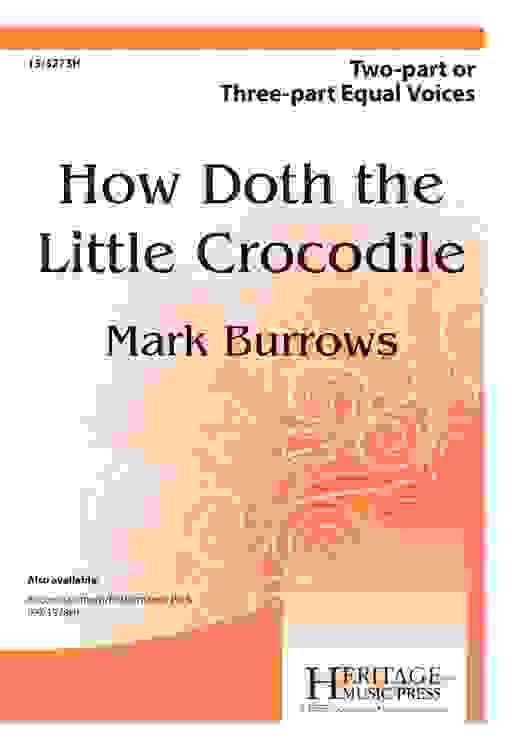 How Doth the Little Crocodile
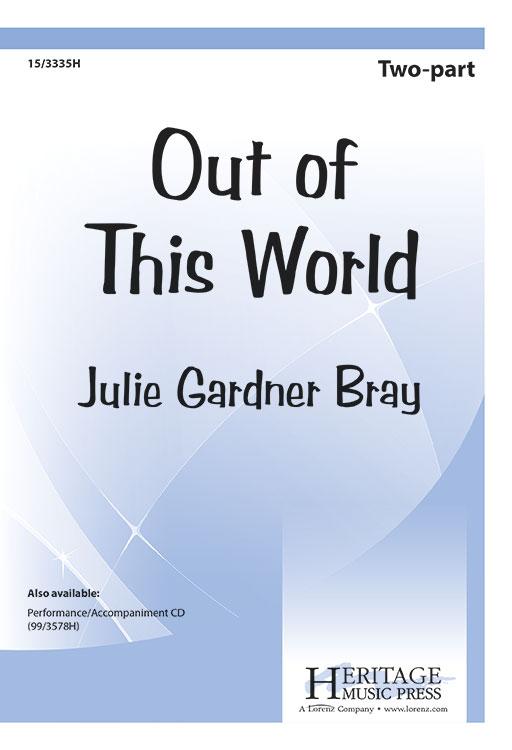 Out of This World
 Ripple of Kindness
 Go Down, Moses