Showing posts with label Music in our schools month. Show all posts

Wednesday, March 30, 2016

Challenge Yields Change


"If it doesn't challenge you, it doesn't change you."
                                                       -Fred DeVito

It's important to introduce our students to music that will motivate them to grow as musicians and individuals. Finding pieces with just the right amount of challenge can be difficult, however, as there's often a fine line between too challenging and not challenging enough. The music below addresses this balancing act by incorporating musical aspects that will stretch your singers while also inspiring them to reach for heightened levels of musical artistry.
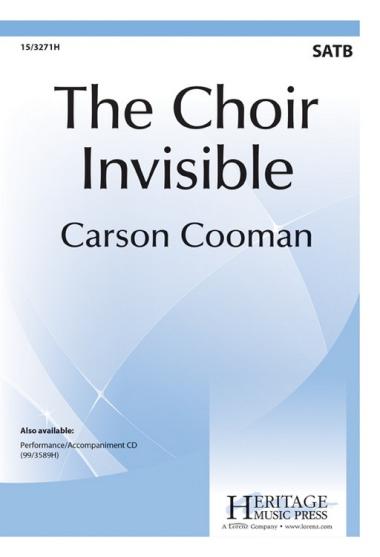

The Choir InvisibleThe Choir Invisible
Carson Cooman

Bold musical lines and expansive harmonies distinguish Carson Cooman's powerful and introspective setting of this well-known George Eliot text. So shall I join the choir invisible whose music is the gladness of the world.

SATB
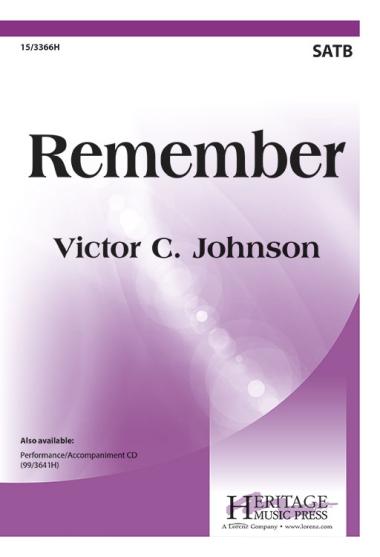


RememberRemember
Victor C. Johnson

Victor Johnson presents wonderful moments for expressive singing and artistic phrasing in Remember. Cascading sixteenth note motifs and a rich harmonic palette unite the musical fabric and amplify the image-laden text. Then in a rising melody, the songs of earth called out to me ... and music flowed from my heart again.

SATB 
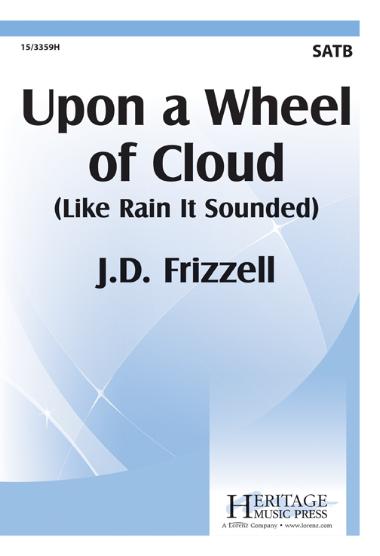


Upon a Wheel of CloudUpon a Wheel of Cloud
J.D. Frizzell

A dazzling showpiece for mature ensembles, J.D. Frizzell's masterful choral writing frames a classic Emily Dickinson poem in this dramatic setting. Upon a Wheel of Cloud begins a cappella and develops into a captivating interplay of vocal lines and piano.

SATB
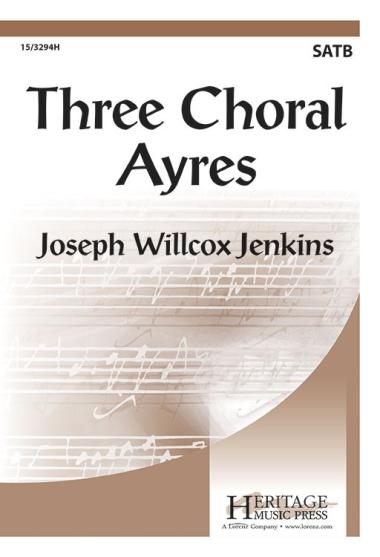


Three Choral AyresThree Choral Ayres
Joseph Willcox Jenkins

This set of engaging madrigals by Joseph Willcox Jenkins includes three short movements designed to be performed as a single work. Full of choral color and compositional texture, this collection is well suited for the accomplished ensemble.

SATB
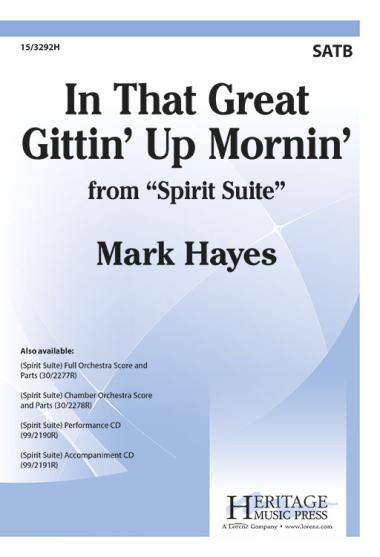


In That Great Gittin' Up Mornin'In That Great Gittin' Up Mornin'
Mark Hayes

From Mark Hayes's popular Spirit Suite, this setting of the spiritual standard features uplifting harmony and inventive accompaniment that supports the text and tune. Highlight an exceptional female voice with the optional soprano solo!

SATB


________________________________________________


Mark is a graduate of Wright State University in Dayton, OH, having received a bachelor’s degree in music education and a master’s degree in choral conducting. 
 
Before coming to Lorenz, Mark was the director of choirs at both Howard W. Blake High School for the Performing Arts in Tampa, FL, and Monroe Jr./Sr. High School in Monroe, OH.  Mark is also currently the director of the KCC Concert Choir, an advanced treble choir within the Kettering Children’s Choir organization. The group has toured extensively, and recently sang in the National Cathedral in Washington, D.C. and with the South Cape Children’s Choir and various performing ensembles on a tour throughout South Africa. In the Spring of 2015, Mark also had the privilege of preparing the choir for performances of the Britten War Requiem under the baton of Keith Lockhart, conductor of the Boston Pops. In addition, Mark has been the music director at his church since the age of 18, and regularly travels throughout the country giving workshops on conducting and worship leading. 
 
Mark is the blessed husband of Jennifer and proud father of Michael and Ellie.


Friday, March 11, 2016

A Bucket and Some Boomwhackers

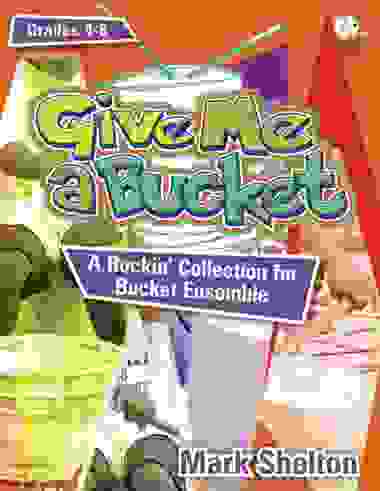
In this video, Mark Shelton plays an excerpt of "Strange Asparagus" from his popular collection, Give Me a Bucket. Enjoy!


Give Me a Bucket

Grades 4–8 • Music education meets the vibrant energy of street musicians in this accessible collection for bucket ensemble. Mark Shelton brings you a dozen arrangements utilizing buckets, pails, and drumsticks. In addition to guiding you through the process of setting up your bucket ensemble, this collection includes teaching and performance tips, some simple choreography, and performance tracks.

To order or for more information, visit www.lorenz.com

_________________________________________________

Mark Shelton has presented hundreds of arts-in-education performances as a percussion soloist and as leader of the world music ensemble, Tin Roof Tango. From the early days of his career as Visiting Artist at Coastal Carolina Community College to his current work as a soloist, clinician, sideman, and entrepreneur, Mark has created programs, products, and educational services for a variety of ages. The author of Give Me a Groove from Heritage Music Press, Mark has also published articles in Percussive Notes, Activate!, Dulcimer Players News, and Worship Musician


Friday, March 6, 2015

Technology Works for Me: Interactive Whiteboards (By Danette Lovelady)


*From the April 2014 edition of "Southwestern Musician" (used with permission)

The one tool that has made my classroom much more efficient is the use of a SMART Board interactive whiteboard to display my lesson information. Using an interactive whiteboard has revolutionized the way I present information to my students. I incorporate it in almost every lesson I teach. 

When I first started teaching recorder, one of the biggest challenges I experienced was keeping students on the correct page in their books. Now I display all our recorder songs on the interactive whiteboard. I never have to roam the room to make sure students are on the correct page or song because the music is clearly displayed on my board at the front of the room. With their attention on the board, it offers a much better way to teach the students how to read rhythms and the staff.

Like other interactive whiteboard options, a SMART Board is delivered with software you can utilize to create lessons formatted similar to a PowerPoint file. The software provides many tools you can use to personalize any lesson to meet the needs of your classroom. It comes with stationary, animated, and interactive clipart; a shape-making tool; customizable game and activity templates; and even the ability to embed sound files directly into your lesson pages, so you won’t need a separate CD player. With one touch of the board, a sound file plays. Here are some examples of how I use my board to create lessons:
  • The interactive whiteboard is great for displaying multiple short rhythmic/melodic patterns. Use the shape tool to create distinctly-colored boxes behind each music pattern so that each group of students can focus on their assigned color. Alternatively, you can color-code the notes themselves inside a neutral box.  
  • My favorite interactive tool in the clipart is an object dice—it allows you to put a photo, letter, number, or word on each side and customize the dice to your lesson. I display numbered rhythm patterns on the board when we are learning recorder, and use three interactive dice to determine who plays (boys, girls, group number, etc. on die one), what pitch is played (B, A, G, etc., on die two), and which pattern number is played (1, 2, 3, etc. on die three). They become much more engaged than if I simply said something like “Boys, pattern 2, note G.”
  • One of the game templates is for a matching game similar to the memory game. There is a grid of interactive tiles that disappear and reappear when touched. You can insert words or pictures under each tile, and students take turns tapping two tiles in order to make a match. I like to have them match a picture of a note/rest with its written name. You could do something similar with matching instrument pictures to instrument names, etc. There are lots of other possibilities.

Don’t Have the Money?

I remember reading articles like this before and thinking that it all sounded wonderful, but I couldn’t imagine how we could get funding to purchase something like that. To utilize an interactive board correctly, you need the board itself, a data projector, a computer, and Internet access. No budget I’ve ever had would support purchasing those things for my classroom. So I began researching grant options and decided to apply for a grant through Texas Commission on the Arts to fund the purchase. After several anxious months of waiting, I was notified that my application had been approved. The grant covered most of the cost for a large SMART Board and a data projector, and I was able to use some budget funds to cover the remaining portion of the purchase—just a few hundred dollars more. 
 
The thought of applying for a grant can be overwhelming, but getting the supplies and equipment you need makes the process worthwhile. If you have limited technology resources, a grant is a great way to provide your students with those things that your budget will not cover. While I use a SMART Board, there are other interactive white boards that offer these same features.

Whatever you implement, you’ll find that nothing compares to the confidence and the efficiency you experience when every student is focused on the correct place in the right music while you are teaching. 

_________________________________________

Danette Lovelady obtained her B.S and M.M. degrees from Texas A&M University-Commerce.  She currently teaches general music and choir for grades 3-4 in Sulphur Springs, TX, and also serves as the worship leader for her church.  She and her husband, Aaron, who is also a music educator, live in Sulphur Springs, TX.  They have two school-aged children, Nate and Benjamin.
 

Thursday, February 5, 2015

February Freebie - "Special Valentine" Lesson

Hello, teachers! We love February (even though many of us have several feet of snow on the ground)! To spread a few more smiles around, we have a free lesson download for you to enjoy with your students for this Valentine’s Day (and hopefully many Valentine’s days to come). Enjoy!

Here are the lesson PDF's:

Special Valentine - Orff


Here are the audio tracks which go with the lesson:


Thursday, August 14, 2014

This is Your Brain on Music

Over the years, there has been plenty of circumstantial evidence about the connection between music and academic success, but, if you are middle aged (or even more “mature”), much of what we learned was based on speculation. With newer brain imagining tools, such as functional magnetic resonance imaging (FMRI), scientists can actually see neurons firing. With more rigorous scientific studies, researchers can dig deeper than the chicken-and-egg theories that were the best we had twenty or thirty years ago (remember the one about music and SAT scores? Did music cause higher SAT scores or did kids with higher IQs gravitate toward music?).

http://news.emory.edu/stories/2012/07/hanna_pladdy_music_brain/thumbs/story_main_vertical.jpg The current research is exciting because the correlations are being drawn and they are strongly supporting the theory that music participation creates better brains. As music teachers, it is important that we keep up on what current research is saying about how participation in music improves our thinking. Share these morsels with your administrators, students, and their parents to remind them that music is not just an activity, but an integral part of academic development.